“Wolves: Reality, Myths, and Madness”
Wolves often prompt an emotional response, from those who contend with the challenges of their presence to those who see them as an integral part of a healthy ecosystem.
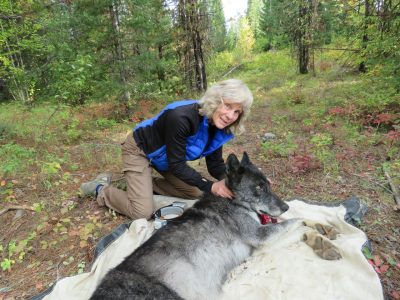
Perhaps no one understands this better than wolf biologist Diane Boyd, who has spent more than four decades studying the animals, reflecting on their role throughout history, and the stories that surround them.
For the inaugural talk in the 24th annual John White Series, Boyd shares her experience as a researcher and her wonder for the natural world. “Instead of just talking about wolf ecology,” she says. “I talk about perceptions, why I wrote the book.”
Her memoir, "A Woman Among Wolves: My Journey Through Forty Years of Wolf Recovery" (Greystone Books, 2024), made a splash and put her on a busy lecture circuit, including an hours-long interview on "The Joe Rogan Experience" (“I found him to be very pleasantly reasonable,” Boyd says).
From the moment Boyd started work up in the North Fork in 1979 with one collared wolf to study to an age when wolves not only have reintroduced themselves across the West but also in Europe, she has in her lifetime witnessed “the most remarkable endangered species recovery story ever, not due to our brilliance but more their resilience and cleverness.”
About the presenter: Through decades in the field, Dr. Diane K. Boyd developed expertise in behavior, conservation, and management of wild wolf populations. She moved to Montana from the Midwest to study gray wolf recovery in the Rocky Mountains, from the first natural colonizer to approximately 3,000 wolves today in the western U.S. Her work has focused on wolf ecology, dispersal, habitat use, prey selection, genetic relationships, and social dimensions of wolf-human conflicts. She also has collaborated on wolf research in British Columbia, Alberta, Ellesmere Island, Italy, and Romania.
“Fire Lookouts: A Peek into the Past of Structures for Fire Spotters”
How many lookout towers are in the Flathead National Forest? How many are on the National Historic Lookout Register?
Are lookouts still in use?
If you’ve hiked up a mountain ridge, you may well know the feeling of surprise to encounter a glass-sided building perched several miles up a trail. Maybe you’ve wondered, while enjoying the view, when and how these structures were built and how they are maintained. Maybe you’ve been curious about the remote square structures surrounded by deep forests and cliffs, with expansive and breathtaking views on all sides, and who gets to call them home for the summer.
The Northwest Montana Lookout Association can help slake this curiosity, even without a strenuous hike.
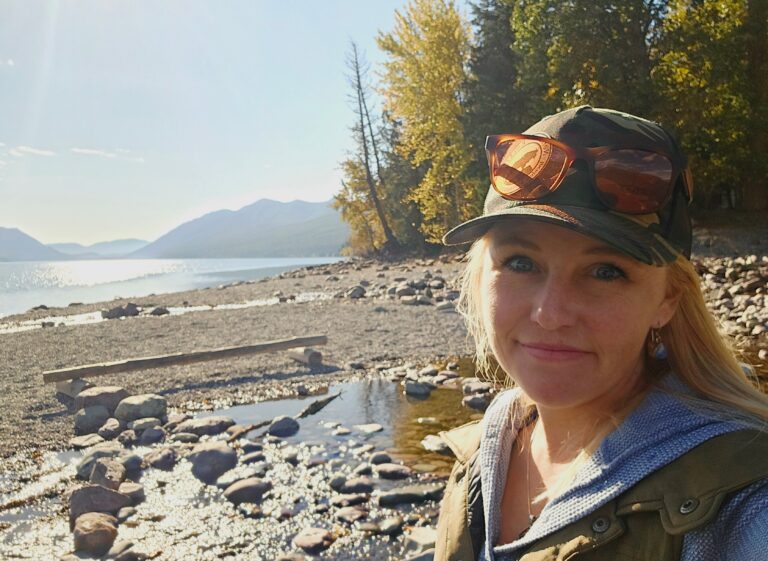
Powell’s presentation on fire lookouts will share the history of our local forest lookouts, what it takes to maintain them, and the role lookouts continue to play in firefighting efforts.
About the presenter: Kira Powell works in public relations in the natural resources field. She spends her free time outdoors and aspires to hike every trail in the Flathead National Forest. She also has a keen interest in the history of fire management, which makes fire lookouts a delightful blend of two passions. In 2022, Powell traded the Cabinet Mountains for the Swan Range and now calls the Flathead Valley home. She had such a blast on a trip up to Stahl Peak lookout with a volunteer crew that she joined the board of the Northwest Montana Lookout Association.
“Blackfoot Place Map Plots a Free-ranging Culture”
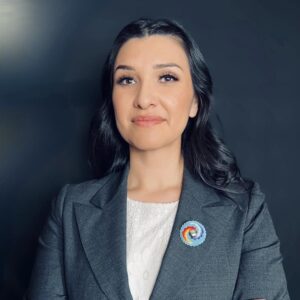
Souta Calling Last (Blackfeet/Blood), who grew up in Heart Butte, has made it a mission to map significant sites of traditional Blackfoot places of creation, animal management, prehistoric presence, and more. From bison corrals to fasting shelters, and from buffalo jumps to rock art and effigies, she has spent more than 10 years mapping 1,000 sites (200 of them public) not only in Montana but in Alberta, Saskatchewan, Manitoba, Idaho, Wyoming, Colorado, Nebraska, Utah, Nevada, Arizona, and New Mexico.
The mapping involves field visits as well as documentation via photographs, research, and writing. Calling Last will talk about how she makes her determinations, share local stories, and discuss Flathead Valley sites such as the Flathead Lake pictographs and the vortex near Columbia Falls. She also will detail a newly discovered rock-art site west of Whitefish that has drawn archaeologists from as far as Italy.
Sometimes questions of the age and authenticity of sites prompts research into symbology and dating according to ceremonies depicted, and imagery style. Some of the sites date to 12,000 years ago, others to the late 1800s. “The narrative I’m trying to change is that these sites are not so mysterious,” Calling Last says, “that they’re still part of practices implemented in various Blackfoot events like an effigy or marker.”
About the presenter: Souta Calling Last founded the nonprofit Indigenous Vision in Arizona in 2015. She holds a BA in hydrology/water resources and an MA in organization development and change management. She recently joined with managers of the renowned Bear Gulch Pictographs area in Central Montana to create a visitors’ center, for which she designed seven exhibits highlighting the Blackfoot narrative.
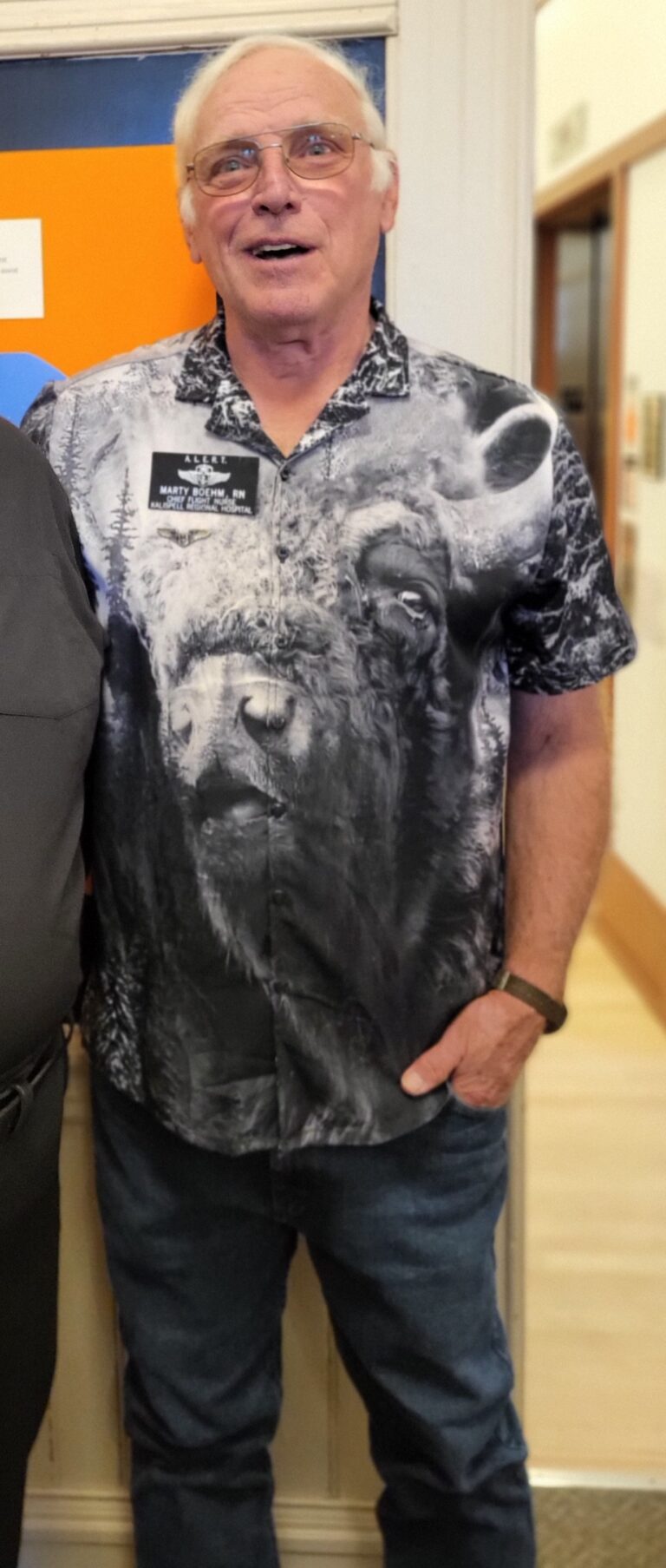
“Everything You Ever Wanted to Know About ALERT, and Then Some”
At a time when drones are ubiquitous and air travel more common, humans don’t think twice about things flying around overhead and rapid response to need.
In the 1970s, Kalispell still relied on its hometown family doctors to race to the hospital to provide emergency care. It also lacked the specialists (such as open heart and neurosurgery) who could care for specific ailments or trauma.
Marty Boehm landed in the Flathead in 1975, before the ALERT program launched. He helped the Advance Life-support and Emergency Rescue Team (ALERT) get off the ground and took part himself in more than 250 flights, from responding to remote scenes of accidents to transporting patients intercity for care not then available in Kalispell.
Boehm will share the origins of ALERT, early missions, and the how-to behind building the first rural air ambulance service of its kind. He welcomes your curiosity and questions for this in-depth conversation on a unique grassroots effort credited with saving thousands of lives.
About the presenter: After entering the Air Force as a registered nurse and serving more than four years as an operating room and flight nurse stationed in Greenland, Marty Boehm arrived in Kalispell in 1975. He started working as an emergency room nurse, then helped build the ALERT program, which marks its 50-year milestone this year. Now retired, he raises bison on a ranch near Creston.